


Why Being Trendy is So Last Season
- Mercedes Kelley
- Oct 19, 2022
- 4 min read


Photo from Tower-The Masters School
If you're active on any social media site, you've probably noticed how quickly trends have phased in and died out in recent years. Short-lived aesthetics and trends are ruling the fashion industry and doing more damage than most consumers recognize. I'm here to tell you why being trendy isn't as important as social media makes it out to be.
Trends have such a short lifespan.
Before the age of modern technology, macro-trends would last between 5-10 years and micro-trends lasted about 3-5 years, according to WRAP (Worldwide Responsible Accredited Production). This may still ring true for older generations, but younger generations are phasing in and out of trends with alarming speed. Social media has accelerated the trend cycle, meaning that our micro-trends are only lasting mere weeks to months.
Because of their short lifespans, they can become extremely expensive to keep up with.

Photo from Tamborasi
To put it simply: the more you engage in short-lived fashion trends, the more clothing you're buying and the more money you're spending on pieces you'll probably never wear again after a few weeks.
Let's look back at the 2014 hipster trend. Some force of nature (Tumblr) possessed an entire generation of teenagers and young adults to purchase mustache T-shirts, galaxy leggings, and bowties. Today, we laugh at ourselves if we took any part in those trends, but the reality is, we spent a ridiculous amount of money on these laughable trends. This is still happening today. Tiktok influencers are promoting trends that we will leave us wondering why we ever spent money on 10 years from now. Our current fashion trends will be laughable just like our 2010 fashion trends were.
Yes, we want to stay up-to-date with our clothing, but there are styles that are timeless and don't require us to spend a fortune on pieces that won't last. Is looking trendy really worth losing the money you could have invested into high-quality pieces that would have lasted you a lifetime?
Fast-dying trends urge consumers to purchase from non-reputable fast-fashion retailers.
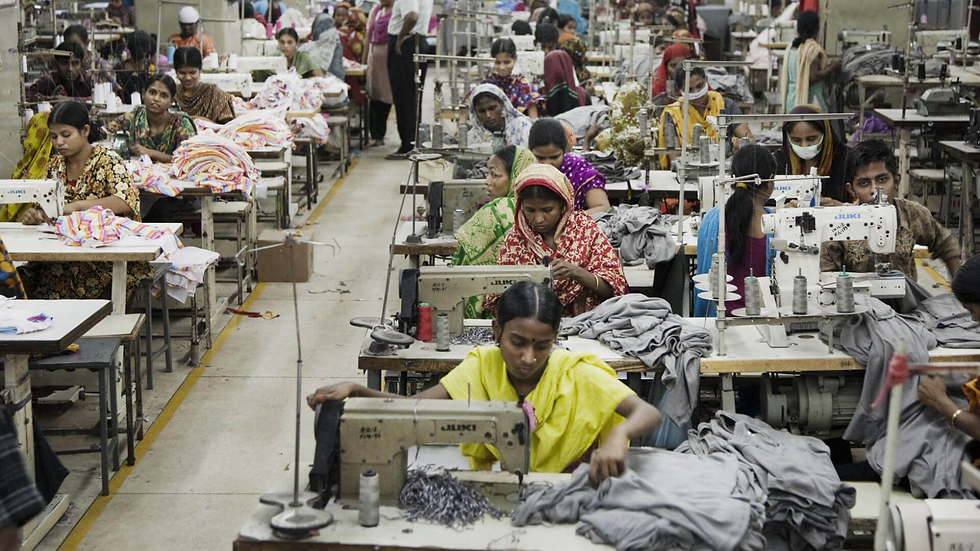
Photo from Earthrise Studio.
When you think of trendy clothing, what brands come to mind? For me, the first brands I think of are Shein, FashionNova, and Forever 21. While these may be some of the most popular fast-fashion brands, they are far from the only ones.In fact, most brands you find in the mall are fast-fashion retailers.
Fast fashion is quite literally killing our planet. I'm sure you've heard this before, and I'll save all of the nitty-gritty details and statistics of the environmental damage for later on in this post.
What I want to focus on now is the unfair labor that is necessary to create fast-fashion. Fast-fashion retailers are exploiting their employees, paying them unfair, unliveable wages, and keeping them in unsafe working environments. As stated by Earthrise.studio, "After countless warning about the integrity of the Rana Plaza clothing factory in Bangladesh, the building collapsed in 2013 taking 1,135 lives and injuring a further 2,500". This is the reality of our fashion trends.
These trendy pieces are not usually worn after the trend has phased out.
I'm sure you've seen those Shein hauls on Tiktok. You know, the ones where a popular influencer shows off the $500 worth of clothing they bought from their favorite cheap brand? While yes, the clothing is cute for now, how long do you think the influencer will actually keep those pieces? My guess is that they'll throw them out when the trend cycle is over (which as we've mentioned, is only a few weeks after it began).
Single-use fashion is killing our planet.
Trendy items are thrown away often, residing in our landfills, wasting the energy used to manufacture them, and taking hundreds of years to break down. Did you know that the fashion industry is one of the leading causes of pollution and carbon emissions? According to WRAP, "in 2019, 208 million pounds of waste were created by single-use outfits" ranking the textile industry as the second biggest polluter in the world, only after oil (WRAP, 2021).
This is a big deal. Our polar ice caps are melting at an alarming speed, causing sea levels to rise across the world and leaving animal species without their natural habitats. This is being accelerated by humanity's carbon emissions, the fashion industry being responsible for a whopping 10% of these emissions annually (Worldbank.org, 2019).

Photo from Oxfam
The fashion industry is also responsible for 92 million tonnes of waste per year, according to BBC. Our waste and pollution is contaminating all aspects of the environment. Our oceans are being polluted with oils and garbage which is being consumed by ocean life. Not only is this killing oceanic ecosystems but if you eat seafood, you can bet you're consuming this waste as well. Pollution is also ruining our topsoil, which is integral for agriculture. "The planet loses 24 billion tonnes of topsoil each year because of land pollution" states rubbishplease.co, meaning our agriculture is losing nutrients and is becoming more and more difficult to grow-again, affecting your food supply.

Photo from the Guardian.
Stay tuned for my next post, detailing how you can break away from the trend cycle and incorporate long-lasting, high quality items into your unique style.
In the meantime, if you want to learn more about this topic, here are some great articles I've found:
A List of 41 Fast Fashion Brands To Avoid (2022) https://thesustainablelivingguide.com/fast-fashion-brands/
THE IMPACT OF FAST FASHION ON THE ENVIRONMENT
https://psci.princeton.edu/tips/2020/7/20/the-impact-of-fast-fashion-on-the-environment
Fast Fashion and Its Environmental Impact
Inhumane working conditions
Why Does The Fashion Industry Care Less About Garment Workers In Other Countries?
https://www.forbes.com/sites/brookerobertsislam/2020/07/30/why-does-the-fashion-industry-care-less-about-garment-workers-in-other-countries/?sh=2dbdff132c0d

Comments